---
output: github_document
---
```{r setup, include = FALSE}
knitr::opts_chunk$set(
collapse = TRUE,
comment = "#>",
echo = FALSE,
warning = FALSE,
message = FALSE,
cache = TRUE
)
```
[gganimate]: https://github.com/thomasp85/gganimate#README
[dplyr-two-table]: https://dplyr.tidyverse.org/articles/two-table.html
[r4ds-set-ops]: http://r4ds.had.co.nz/relation-data.html#set-operations
# Tidy Animated Verbs
Garrick Aden-Buie -- [@grrrck](https://twitter.com/grrrck) -- [garrickadenbuie.com](https://www.garrickadenbuie.com). Set operations contributed by [Tyler Grant Smith](https://github.com/TylerGrantSmith).
[](https://mybinder.org/v2/gh/gadenbuie/tidy-animated-verbs/master?urlpath=rstudio)
[_-CC0-green.svg)](https://creativecommons.org/publicdomain/zero/1.0/)
[_-MIT-green.svg)](https://opensource.org/licenses/MIT)
- [**Mutating Joins**](#mutating-joins) — [`inner_join()`](#inner-join), [`left_join()`](#left-join),
[`right_join()`](#right-join), [`full_join()`](#full-join)
- [**Filtering Joins**](#filtering-joins) — [`semi_join()`](#semi-join), [`anti_join()`](#anti-join)
- [**Set Operations**](#set-operations) — [`union()`](#union), [`union_all()`](#union-all), [`intersect()`](#intersect), [`setdiff()`](#setdiff)
- [**Tidy Data**](#tidy-data) — [`spread()` and `gather()`](#spread-and-gather)
- Learn more about
- [Relational Data](#relational-data)
- [gganimate](#gganimate)
Please feel free to use these images for teaching or learning about action verbs from the [tidyverse](https://tidyverse.org).
You can directly download the [original animations](images/) or static images in [svg](images/static/svg/) or [png](images/static/png/) formats, or you can use the [scripts](R/) to recreate the images locally.
Currently, the animations cover the [dplyr two-table verbs][dplyr-two-table] and I'd like to expand the animations to include more verbs from the tidyverse.
[Suggestions are welcome!](https://github.com/gadenbuie/tidy-animated-verbs/issues)
## Mutating Joins
```{r intial-dfs}
source("R/00_base_join.R")
df_names <- data_frame(
.x = c(1.5, 4.5), .y = 0.25,
value = c("x", "y"),
size = 12,
color = "black"
)
g <- plot_data(initial_join_dfs) +
geom_text(data = df_names, family = "Fira Mono", size = 24)
save_static_plot(g, "original-dfs")
```
 ```{r echo=TRUE}
x
y
```
### Inner Join
> All rows from `x` where there are matching values in `y`, and all columns from `x` and `y`.
```{r inner-join}
source("R/inner_join.R")
```

```{r echo=TRUE}
inner_join(x, y, by = "id")
```
### Left Join
> All rows from `x`, and all columns from `x` and `y`. Rows in `x` with no match in `y` will have `NA` values in the new columns.
```{r left-join}
source("R/left_join.R")
```

```{r echo=TRUE}
left_join(x, y, by = "id")
```
### Left Join (Extra Rows in y)
> ... If there are multiple matches between `x` and `y`, all combinations of the matches are returned.
```{r left-join-extra}
source("R/left_join_extra.R")
```

```{r echo=TRUE}
y_extra # has multiple rows with the key from `x`
left_join(x, y_extra, by = "id")
```
### Right Join
> All rows from y, and all columns from `x` and `y`. Rows in `y` with no match in `x` will have `NA` values in the new columns.
```{r right-join}
source("R/right_join.R")
```

```{r echo=TRUE}
right_join(x, y, by = "id")
```
### Full Join
> All rows and all columns from both `x` and `y`. Where there are not matching values, returns `NA` for the one missing.
```{r full-join}
source("R/full_join.R")
```

```{r echo=TRUE}
full_join(x, y, by = "id")
```
## Filtering Joins
### Semi Join
> All rows from `x` where there are matching values in `y`, keeping just columns from `x`.
```{r semi-join}
source("R/semi_join.R")
```

```{r echo=TRUE}
semi_join(x, y, by = "id")
```
### Anti Join
> All rows from `x` where there are not matching values in `y`, keeping just columns from `x`.
```{r anti-join}
source("R/anti_join.R")
```

```{r echo=TRUE}
anti_join(x, y, by = "id")
```
## Set Operations
```{r intial-dfs-so}
source("R/00_base_set.R")
df_names <- data_frame(
.x = c(2.5, 5.5), .y = 0.25,
value = c("x", "y"),
size = 12,
color = "black"
)
g <- plot_data_set(initial_set_dfs, "", NULL, NULL) +
geom_text(data = df_names, family = "Fira Mono", size = 24)
save_static_plot(g, "original-dfs-set-ops")
```
```{r remove-set-ops-ids}
x <- x %>% select(-id)
y <- y %>% select(-id)
```
```{r echo=TRUE}
x
y
```
### Inner Join
> All rows from `x` where there are matching values in `y`, and all columns from `x` and `y`.
```{r inner-join}
source("R/inner_join.R")
```

```{r echo=TRUE}
inner_join(x, y, by = "id")
```
### Left Join
> All rows from `x`, and all columns from `x` and `y`. Rows in `x` with no match in `y` will have `NA` values in the new columns.
```{r left-join}
source("R/left_join.R")
```

```{r echo=TRUE}
left_join(x, y, by = "id")
```
### Left Join (Extra Rows in y)
> ... If there are multiple matches between `x` and `y`, all combinations of the matches are returned.
```{r left-join-extra}
source("R/left_join_extra.R")
```

```{r echo=TRUE}
y_extra # has multiple rows with the key from `x`
left_join(x, y_extra, by = "id")
```
### Right Join
> All rows from y, and all columns from `x` and `y`. Rows in `y` with no match in `x` will have `NA` values in the new columns.
```{r right-join}
source("R/right_join.R")
```

```{r echo=TRUE}
right_join(x, y, by = "id")
```
### Full Join
> All rows and all columns from both `x` and `y`. Where there are not matching values, returns `NA` for the one missing.
```{r full-join}
source("R/full_join.R")
```

```{r echo=TRUE}
full_join(x, y, by = "id")
```
## Filtering Joins
### Semi Join
> All rows from `x` where there are matching values in `y`, keeping just columns from `x`.
```{r semi-join}
source("R/semi_join.R")
```

```{r echo=TRUE}
semi_join(x, y, by = "id")
```
### Anti Join
> All rows from `x` where there are not matching values in `y`, keeping just columns from `x`.
```{r anti-join}
source("R/anti_join.R")
```

```{r echo=TRUE}
anti_join(x, y, by = "id")
```
## Set Operations
```{r intial-dfs-so}
source("R/00_base_set.R")
df_names <- data_frame(
.x = c(2.5, 5.5), .y = 0.25,
value = c("x", "y"),
size = 12,
color = "black"
)
g <- plot_data_set(initial_set_dfs, "", NULL, NULL) +
geom_text(data = df_names, family = "Fira Mono", size = 24)
save_static_plot(g, "original-dfs-set-ops")
```
```{r remove-set-ops-ids}
x <- x %>% select(-id)
y <- y %>% select(-id)
```
 ```{r echo=TRUE}
x
y
```
### Union
> All unique rows from `x` and `y`.
```{r union}
source("R/union.R")
<>
```

```{r echo=TRUE}
union(x, y)
```

```{r echo=TRUE}
union(y, x)
```
### Union All
> All rows from `x` and `y`, keeping duplicates.
```{r union-all}
source("R/union_all.R")
<>
```

```{r echo=TRUE}
union_all(x, y)
```
### Intersection
> Common rows in both `x` and `y`, keeping just unique rows.
```{r intersect}
source("R/intersect.R")
<>
```
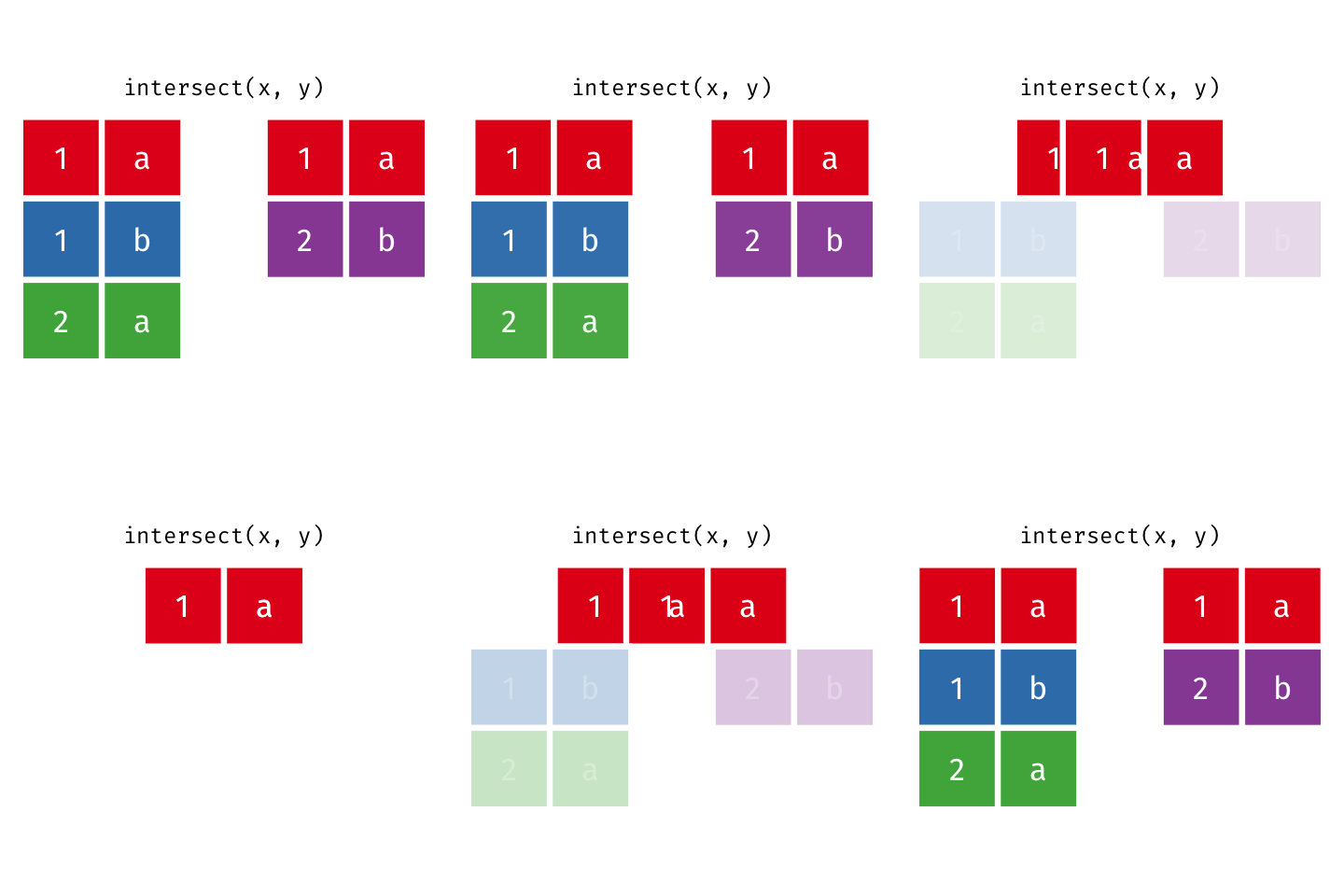
```{r echo=TRUE}
intersect(x, y)
```
### Set Difference
> All rows from `x` which are not also rows in `y`, keeping just unique rows.
```{r setdiff}
source("R/setdiff.R")
<>
```
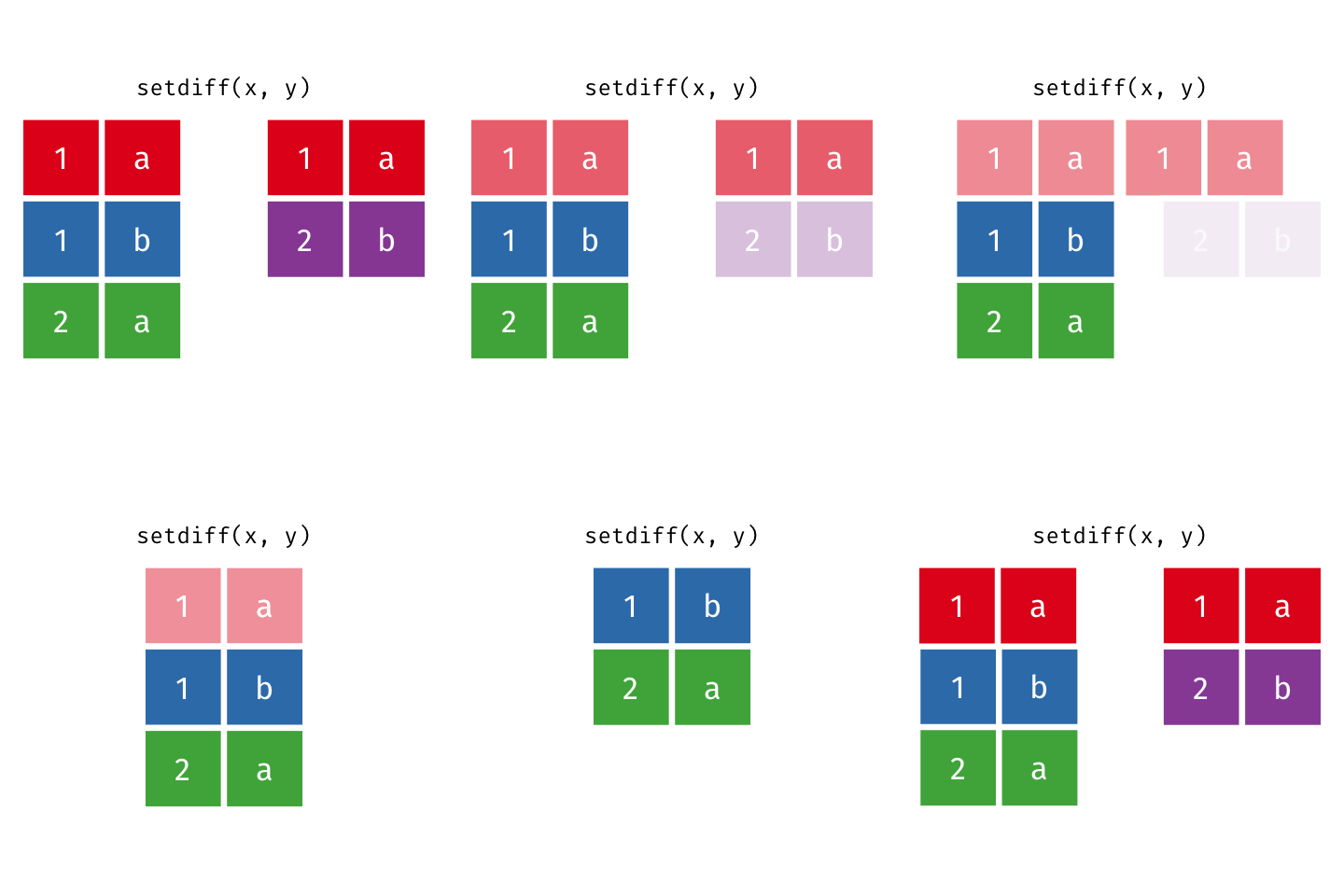
```{r echo=TRUE}
setdiff(x, y)
```
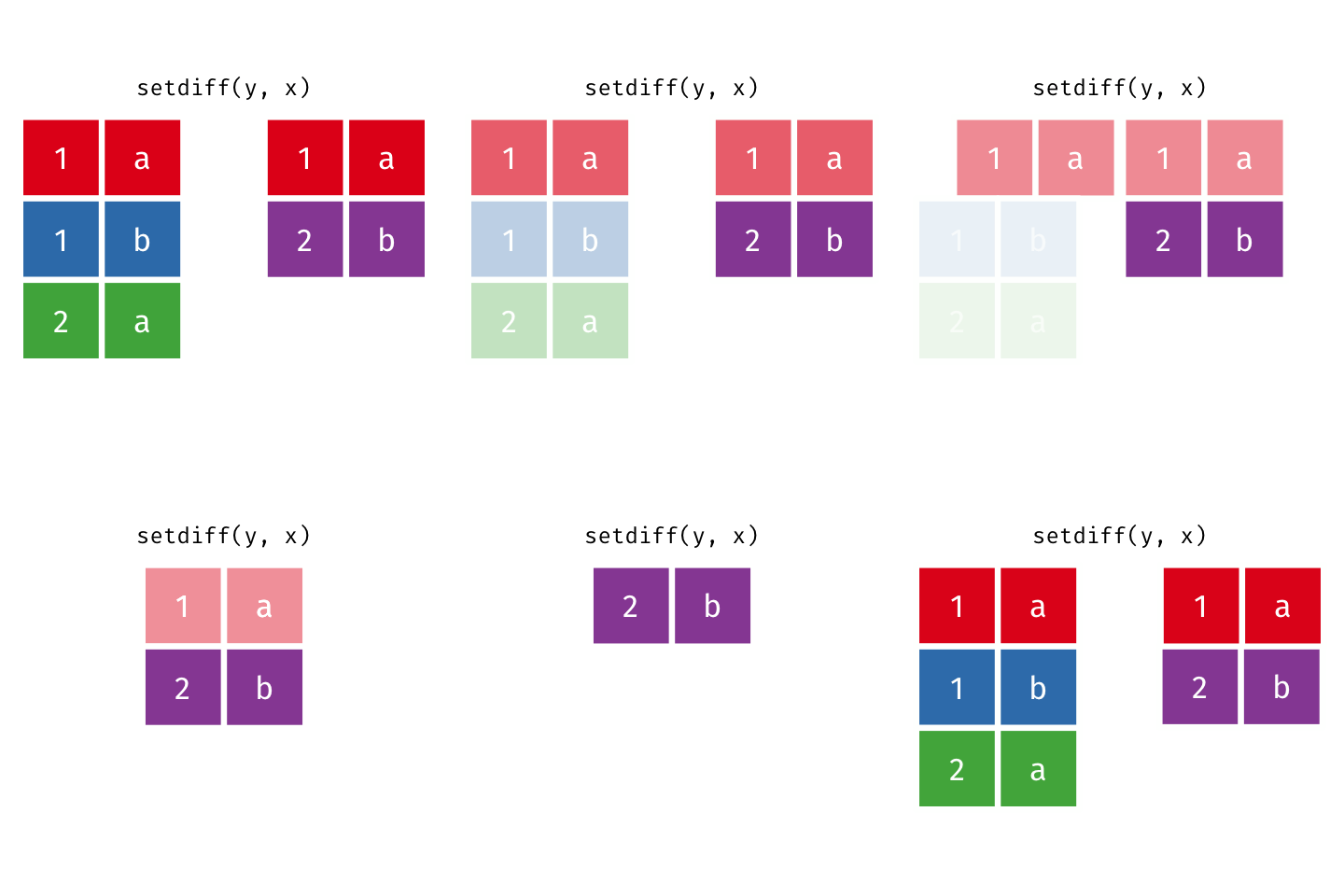
```{r echo=TRUE}
setdiff(y, x)
```
## Tidy Data
```{r tidyr-wide-long}
source("R/tidyr_spread_gather.R")
tidy_plots <- list()
tidy_plots$wide <- bind_rows(sg_wide, sg_wide_labels)
tidy_plots$long <- bind_rows(sg_long, sg_long_labels)
tidy_plots <- map(tidy_plots, ~ mutate(.,
.text_color = ifelse(grepl("id|key|val", value), "black", "white"),
.text_size = ifelse(grepl("id|key|val", value), 6, 10)
)) %>%
imap(~ plot_data(.x, .y))
tidy_plots$wide <- tidy_plots$wide + ylim(-6.5, 0.5)
save_static_plot(cowplot::plot_grid(plotlist = tidy_plots, axis = "t"), "original-dfs-tidy")
```

```{r echo=TRUE}
wide
long
```
### Spread and Gather
`spread(data, key, value)`
> Spread a key-value pair across multiple columns.
`gather(data, key = "key", value = "value", ...)`
> Gather takes multiple columns and collapses into key-value pairs, duplicating all other columns as needed. You use `gather()` when you notice that you have columns that are not variables.

```{r echo=TRUE}
gather(wide, key, val, x:z)
spread(long, key, val)
```
## Learn More
### Relational Data
The [Relational Data](http://r4ds.had.co.nz/relation-data.html) chapter of the
[R for Data Science](http://r4ds.had.co.nz/) book by Garrett Grolemund and Hadley Wickham
is an excellent resource for learning more about relational data.
The [dplyr two-table verbs vignette][dplyr-two-table]
and Jenny Bryan's [Cheatsheet for dplyr join functions](http://stat545.com/bit001_dplyr-cheatsheet.html)
are also great resources.
### gganimate
The animations were made possible by the newly re-written [gganimate] package by
[Thomas Lin Pedersen](https://github.com/thomasp85)
(original by [Dave Robinson](https://github.com/dgrtwo)).
The [package readme][gganimate] provides an excellent (and quick) introduction to gganimte.
```{r echo=TRUE}
x
y
```
### Union
> All unique rows from `x` and `y`.
```{r union}
source("R/union.R")
<>
```

```{r echo=TRUE}
union(x, y)
```

```{r echo=TRUE}
union(y, x)
```
### Union All
> All rows from `x` and `y`, keeping duplicates.
```{r union-all}
source("R/union_all.R")
<>
```

```{r echo=TRUE}
union_all(x, y)
```
### Intersection
> Common rows in both `x` and `y`, keeping just unique rows.
```{r intersect}
source("R/intersect.R")
<>
```

```{r echo=TRUE}
intersect(x, y)
```
### Set Difference
> All rows from `x` which are not also rows in `y`, keeping just unique rows.
```{r setdiff}
source("R/setdiff.R")
<>
```

```{r echo=TRUE}
setdiff(x, y)
```

```{r echo=TRUE}
setdiff(y, x)
```
## Tidy Data
```{r tidyr-wide-long}
source("R/tidyr_spread_gather.R")
tidy_plots <- list()
tidy_plots$wide <- bind_rows(sg_wide, sg_wide_labels)
tidy_plots$long <- bind_rows(sg_long, sg_long_labels)
tidy_plots <- map(tidy_plots, ~ mutate(.,
.text_color = ifelse(grepl("id|key|val", value), "black", "white"),
.text_size = ifelse(grepl("id|key|val", value), 6, 10)
)) %>%
imap(~ plot_data(.x, .y))
tidy_plots$wide <- tidy_plots$wide + ylim(-6.5, 0.5)
save_static_plot(cowplot::plot_grid(plotlist = tidy_plots, axis = "t"), "original-dfs-tidy")
```

```{r echo=TRUE}
wide
long
```
### Spread and Gather
`spread(data, key, value)`
> Spread a key-value pair across multiple columns.
`gather(data, key = "key", value = "value", ...)`
> Gather takes multiple columns and collapses into key-value pairs, duplicating all other columns as needed. You use `gather()` when you notice that you have columns that are not variables.

```{r echo=TRUE}
gather(wide, key, val, x:z)
spread(long, key, val)
```
## Learn More
### Relational Data
The [Relational Data](http://r4ds.had.co.nz/relation-data.html) chapter of the
[R for Data Science](http://r4ds.had.co.nz/) book by Garrett Grolemund and Hadley Wickham
is an excellent resource for learning more about relational data.
The [dplyr two-table verbs vignette][dplyr-two-table]
and Jenny Bryan's [Cheatsheet for dplyr join functions](http://stat545.com/bit001_dplyr-cheatsheet.html)
are also great resources.
### gganimate
The animations were made possible by the newly re-written [gganimate] package by
[Thomas Lin Pedersen](https://github.com/thomasp85)
(original by [Dave Robinson](https://github.com/dgrtwo)).
The [package readme][gganimate] provides an excellent (and quick) introduction to gganimte.